

How to Source Artisan Gift Items: 2026 Step-by-Step Guide
Table of Contents
- What You'll Need Before You Start Sourcing
- Step 1: Define the Moment and the Recipient
- Step 2: Where to Source Artisan Gift Items
- How to Verify Artisan Quality Before You Buy
- Ethical Sourcing for Small Businesses
- Curating Artisan Gift Hampers That Feel Personal
- Common Mistakes to Avoid When Sourcing Artisan Gifts
- Frequently Asked Questions
Last Updated: September 28, 2026
What You'll Need Before You Start Sourcing
Sourcing artisan gift items starts with a clear brief, not a shopping spree. Gather four things first: a budget range, a delivery date, a recipient profile, and a shortlist of what the gift should say. This guide from The Gifting Pantry walks through the full process, step by step.
Here's why this matters. Most gift disasters trace back to a missing brief, not a bad product.
Before you open a single website, write down:
- The occasion and the exact date it falls on
- Your budget range, including delivery
- Any dietary, cultural or alcohol restrictions
- The feeling you want the gift to create
That last point is the one people skip. A settlement gift for a client should feel warm and professional. A sympathy gift should feel gentle, never cheerful. Knowing the feeling first makes every later decision easier.
The good news: once your brief exists, sourcing artisan gift items becomes a filtering exercise rather than a guessing game. Below, we'll show you exactly how to move from brief to delivered gift.
Step 1: Define the Moment and the Recipient
The moment shapes the gift more than the budget does. A housewarming, a new baby, a work anniversary and a bereavement each call for something different.
Ask three questions:
- What does this person need right now?
- What would feel tone-deaf?
- What will they still use in six months?
A new parent needs quiet, easy comfort. A client who just settled on a property needs something that reads as congratulations, not sales pressure. Someone grieving needs softness, not celebration.
Once the moment is clear, the recipient profile narrows it further. Note their tastes, hobbies, and any restrictions. This one step prevents most mismatched gifts.
Step 2: Where to Source Artisan Gift Items
You can source artisan gift items through three main channels: physical markets and makers' studios, online directories, and pre-curated hampers. Each suits a different timeline and budget.
If you need speed and consistency, pre-curated hampers win. If you enjoy the hunt, markets and directories give you more control. Most people end up mixing all three depending on the occasion.
Markets, Makers' Studios and Independent Retailers
Local markets and studios are where you meet the maker. You can ask questions, touch the work, and often request custom pieces.
What to look for:
- A stallholder who can explain their materials and process
- Consistent finishing across multiple pieces
- A maker who takes commissions without rushing
The trade-off is time. Markets run on set days, and custom work takes weeks. If your deadline is tight, this route may not fit.
Online Directories and Maker Platforms
Online directories connect you to makers you'd never find locally. They're ideal when you need a specific craft or a bulk order.
Filter by craft type, location and lead time. Then check reviews and ask about turnaround before committing.
| Sourcing Route | Best For | Typical Lead Time | Main Trade-Off |
|---|---|---|---|
| Local markets | Unique, one-off pieces | Same day | Limited stock, set days |
| Makers' studios | Custom and commissioned work | Weeks | Longer wait |
| Online directories | Specific crafts, bulk orders | Days to weeks | Can't inspect in person |
| Pre-curated hampers | Speed and consistency | Often same-day dispatch | Less control over items |
For corporate gifting at scale, pre-curated hampers remove almost all the admin. That's the route The Gifting Pantry built its shelves around.
How to Verify Artisan Quality Before You Buy
Verifying artisan quality means checking three things: how it's made, who made it, and whether the finish holds up. Genuine artisan work shows small variations, not factory-perfect uniformity.
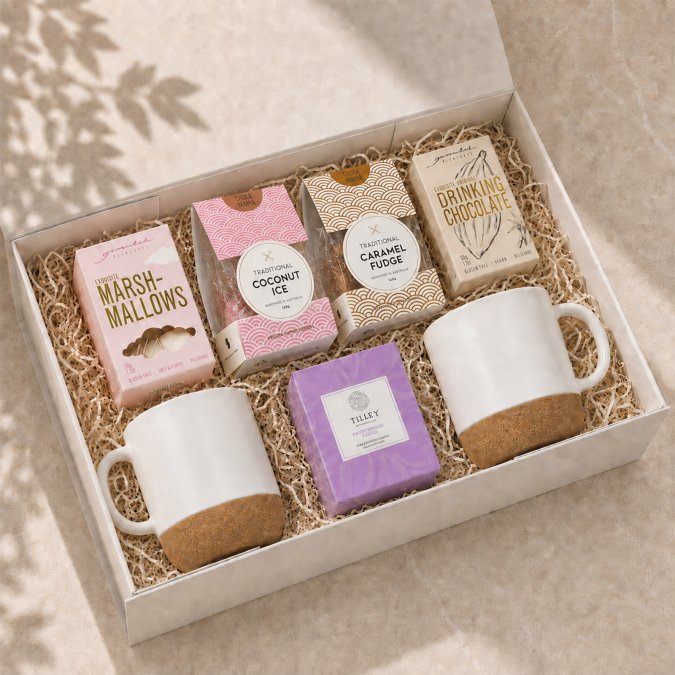
Start with these checks:
- Maker's mark or signature on the piece
- Materials list that names what it's actually made from
- Consistent weight and finish across similar items
- Real photos, not just styled stock imagery
- Reviews that mention durability, not just looks
Ask the maker directly. A genuine artisan will happily explain their process. Vague answers are a red flag.
For hampers, quality control happens at the curation stage. A well-built hamper only includes items that earn their place, with nothing added just to fill space.
Ethical Sourcing for Small Businesses
Ethical sourcing for small businesses comes down to asking where things come from and who benefits. You don't need a formal policy to start. You need to ask better questions.
Practical steps:
- Ask makers about their materials and supply chain
- Prioritise local and independent producers where you can
- Check for fair pricing, not just the cheapest option
- Confirm any alcohol items follow responsible service rules
- Look for clear, honest product descriptions
For corporate buyers, ethics and reputation are linked. A gift that reflects your values protects your brand. A gift that cuts corners can undo it.
Small businesses have an advantage here. You can build direct relationships with makers, which larger buyers often can't. Those relationships usually mean better communication and faster fixes when something goes wrong.
Curating Artisan Gift Hampers That Feel Personal
Curating artisan gift hampers is about balance, not volume. A strong hamper has a clear theme, a mix of textures, and nothing that feels like padding.
Build yours around one idea. A pamper hamper, a nightcap hamper and a sympathy hamper each tell a different story. Mixing them creates a box that says nothing.
A simple structure works well:
- One hero item that anchors the theme
- Two or three supporting items that fit the mood
- One consumable for immediate enjoyment
- A handwritten card that ties it together
The card matters more than most people expect. A personal message turns a collection of products into a gift.
This is where pre-curated hampers save real effort. The Gifting Pantry packs each hamper by hand, arranges shelves by moment, and includes a handwritten card, a gift sleeve and a dispatch date you choose. Shipping is free Australia-wide, with no minimum spend.
Common Mistakes to Avoid When Sourcing Artisan Gifts
The biggest mistake is buying for the occasion instead of the person. A generic "congratulations" box lands in a cupboard. A thoughtful one gets used.
Watch for these traps:
- Leaving it too late. Custom work takes weeks, so start early.
- Ignoring restrictions. Check dietary, cultural and alcohol limits first.
- Chasing the lowest price. Cheap usually shows in the finish.
- Forgetting the card. The message is half the gift.
- No quality check. Always confirm what will actually arrive.
For corporate buyers, one more mistake stands out: treating every recipient the same. Personalisation at scale is possible, but it needs planning. Ordering early gives you room to add names, messages and dispatch dates without stress.
Get these basics right, and sourcing artisan gift items stops being a gamble.
Sourcing artisan gift items well takes a clear brief, a little patience, and a maker you can trust. When the deadline is close or the order is large, that's where The Gifting Pantry helps. Every hamper is pre-curated, packed by hand and shipped free Australia-wide, with same-day dispatch for orders placed by 12pm on weekdays. Corporate gifting comes with no minimum order and personalisation available, so you can recognise 40 staff or thank a single client without it feeling impersonal. Get started with The Gifting Pantry and send a gift that feels like a hug.
Frequently Asked Questions
What defines an artisan gift item?
An artisan gift item is made in small batches by a named maker who controls the process from start to finish. Look for hand-finished details, natural variation between pieces, and a maker's mark or signature. Mass-produced goods look identical every time; artisan pieces carry small differences that show a human made them. The item should also have a story behind it, whether that's a family recipe, a traditional technique, or locally sourced materials.
How can I verify the authenticity of handmade products?
Ask the maker directly about their process, batch sizes, and materials. Genuine artisans answer these questions easily and often invite you to see their studio. Check for maker's marks, dated labels, or batch numbers. Look at product photos for natural variation: slight differences in glaze, grain, or stitching usually confirm hand production. If every piece looks machine-identical or the seller cannot explain how an item was made, treat the artisan claim with caution.
How do I ensure ethical sourcing for artisan gifts?
Start by asking where materials come from and who makes each component. Ethical sourcing for small businesses means paying makers fairly, ordering in quantities they can manage, and being honest about lead times. Look for certifications where relevant, such as Fairtrade or Australian organic marks, but treat them as one signal among many. Long-term relationships with a small number of makers usually deliver better outcomes than chasing the lowest price across many suppliers.
What should I look for when selecting artisan goods for a hamper?
Balance consumables with keepsakes so the hamper works on more than one level. Check that flavours, scents, and textures complement each other rather than clash. Confirm shelf life and packaging are suitable for the delivery window, especially for perishable items. For corporate or client gifts, keep the mix appropriate for the occasion and consider alcohol-free options for sympathy or workplace settings. Every item should earn its place, with nothing added just to fill space.