

Thoughtful Alcohol Free Sympathy Hampers: 2026 Guide
Table of Contents
- Why Alcohol-Free Sympathy Hampers Feel More Thoughtful
- Sympathy Gift Etiquette: What to Send and When
- What to Write in a Sympathy Card for a Hamper
- What to Include in an Alcohol-Free Sympathy Hamper
- How to Support Someone During Grief (Beyond the Hamper)
- Choosing the Right Sympathy Hamper for the Occasion
- Common Mistakes to Avoid When Sending Sympathy Gifts
- Frequently Asked Questions
Last Updated: September 25, 2026
Why Alcohol-Free Sympathy Hampers Feel More Thoughtful
A thoughtful alcohol-free sympathy hamper works because it removes a decision from someone who has no energy to make one. When someone is grieving, the last thing they need is a bottle of wine they won't open, or a gift that assumes they're hosting a celebration.
This guide from The Gifting Pantry covers what to send, when to send it, and what to write, so the gesture lands the way you intend.
Sympathy hampers are pre-curated gift boxes designed to comfort someone after a loss. They typically contain practical staples, comfort foods, and soothing non-food items, all chosen so the recipient doesn't have to think about anything.
Why does alcohol-free matter? Because grief doesn't follow a script. Some people don't drink for health, faith, or personal reasons. Others are managing medication. Sending alcohol assumes something about the recipient that you may not know, and that assumption can quietly undermine the gesture.
The practical items are the ones that get used. Tea, biscuits, a soft blanket, a candle. These are the things that actually help on a difficult Tuesday afternoon, weeks after the flowers have wilted.
Sympathy Gift Etiquette: What to Send and When
Sympathy gift etiquette is straightforward: send something practical, send it promptly, and don't expect a response. The goal is to lighten the load, not add to it.
Timing matters more than most people realise. A common mistake is waiting for the "right moment" and sending something weeks later. In practice, the first two weeks after a loss are when support matters most, and again around the one-month mark when everyone else has moved on.
Here's a simple framework for what to send and when:
Timing |
What to Send |
Why It Helps |
|---|---|---|
First 3 days |
Card or message only |
Family is often overwhelmed with logistics |
Days 4-14 |
Sympathy hamper with practical staples |
Meals and daily comfort are needed most |
Weeks 3-6 |
A second, smaller gesture |
Support often fades when it's still needed |
Anniversaries and milestones |
A quiet note or small hamper |
Grief resurfaces at predictable points |
What you shouldn't send: anything requiring assembly, anything perishable that needs immediate attention, and anything that assumes the recipient will host guests.
If you're sending on behalf of a workplace, Fair Work Ombudsman guidance on compassionate leave sets out the entitlements employees have, which can help you time your gesture around when someone is actually away from work.
What to Write in a Sympathy Card for a Hamper
What to write in a sympathy card is simpler than most people fear: name the person who died, say you're sorry, and offer something specific. Avoid platitudes and avoid making the card about you.
A good card is short. Three or four sentences is plenty. The recipient will read it more than once, and they'll remember the specific detail you included.
Here's a template you can adapt:
Dear [Name],
I was so sorry to hear about [person's name]. I've been thinking about you and [what you loved about them, if you knew them].
I've sent a hamper with a few things I hope will make the next few weeks a little easier. No need to reply. I'll check in with you in a couple of weeks.
With love, [Your name]
What to avoid: "They're in a better place," "Everything happens for a reason," "Let me know if you need anything." That last one puts the burden back on the grieving person to ask.
If you didn't know the deceased, keep it brief and focus on the recipient. "I'm so sorry for your loss. Thinking of you and your family."
What to Include in an Alcohol-Free Sympathy Hamper
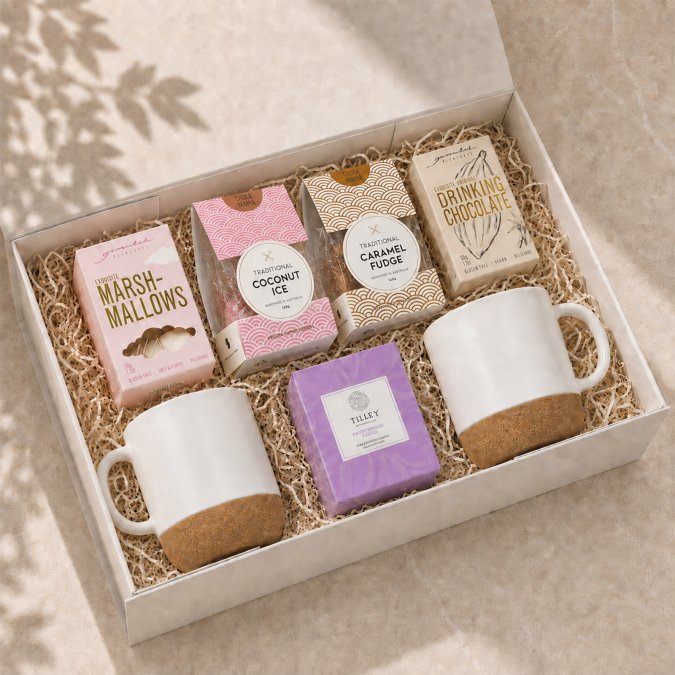
A well-built alcohol-free sympathy hamper contains two categories: comfort foods and practical staples, plus soothing non-food items. The balance matters more than the quantity.
Infographic showing the essential contents for alcohol-free sympathy hampers, including tea, biscuits and candles.
Here's what earns its place in the box.
Comfort Foods and Practical Staples
- Tea and coffee: Easy to make, comforting, and used daily
- Biscuits and shortbread: Shelf-stable, no preparation required
- Chocolate: Universally welcome, and keeps well
- Local sweets: Feels considered rather than generic
The test is simple: can the recipient use this without leaving the house or making a decision? If yes, it belongs.
Soothing Non-Food Items
- A candle: Creates calm without requiring anything
- A soft throw or blanket: Physical comfort, used repeatedly
- Hand cream or bath salts: Small acts of self-care
- A journal or notebook: Some people process grief by writing
Skip anything that requires assembly, batteries, or a screen. The recipient has enough on their plate.
At The Gifting Pantry, we build our alcohol-free sympathy hampers around exactly this principle: every item earns its place, nothing is there just to fill space. Each hamper arrives hand-packed with a handwritten card and a dispatch date you choose.
How to Support Someone During Grief (Beyond the Hamper)
How to support someone during grief comes down to consistency, not grand gestures. The hamper opens the door. What you do in the weeks after matters more.
Practical support beats emotional advice almost every time. Here's what actually helps:
- Drop off a meal without being asked. Don't offer. Just do it, and leave it at the door if they're not up to visitors.
- Handle a specific task. Mow the lawn, walk the dog, pick up groceries. Name the task when you offer.
- Remember the dates. Birthdays, anniversaries, and holidays are hard. A short message on those days means a lot.
- Keep checking in. Set a reminder for one month, three months, and six months out. That's when support tends to disappear.
What doesn't help: asking "how are you?" repeatedly, offering unsolicited advice about grief stages, or disappearing because you don't know what to say.
If you're supporting a colleague, Lifeline Australia's resources on supporting someone after a loss offers practical guidance on what to say and what to avoid. Beyond Blue's information on grief and loss is another useful reference if you want to understand what the person may be experiencing.
Choosing the Right Sympathy Hamper for the Occasion
Choosing the right sympathy hamper depends on three things: your relationship to the recipient, how much time has passed, and what you know about their circumstances.
For a close friend or family member, a larger hamper with a mix of comfort foods and soothing items works well. For a colleague or acquaintance, a smaller, more restrained hamper is more appropriate. For a workplace gesture, a practical hamper with shelf-stable items avoids any awkwardness around dietary needs or timing.
A quick decision guide:
- Close relationship, recent loss: Full hamper with comfort foods, tea, candle, and a handwritten card
- Colleague or acquaintance: Smaller hamper, practical staples, brief card
- One month or more after the loss: Smaller gesture, focus on a specific comfort item
- Workplace or team gift: Practical hamper, no perishables, card signed by the team
If you're sending on behalf of a business, personalisation matters.
Common Mistakes to Avoid When Sending Sympathy Gifts
The most common mistakes when sending sympathy gifts are sending alcohol, sending something too cheerful, and expecting a thank-you. Each one undermines the gesture in a different way.
Here's what to watch for:
- Sending alcohol without knowing the recipient drinks. This is why alcohol-free sympathy hampers exist. You don't have to guess.
- Choosing a hamper that looks like a celebration. Bright colours and "congratulations" messaging feel tone-deaf in a grief context.
- Adding a card that puts the burden back on them. "Let me know if you need anything" is well-meaning but unhelpful.
- Waiting too long. Support is most valuable in the first two weeks.
- Expecting acknowledgement. Don't follow up asking if they received it. Let the gesture stand on its own.
- Sending something that requires assembly or refrigeration. Practicality beats presentation.
Frequently Asked Questions
What should you include in an alcohol-free sympathy hamper?
Focus on practical comfort and items that won't overwhelm. Good choices include high-quality tea or coffee, soft biscuits, a comforting blanket, a candle, hand cream, or a journal. Avoid anything too cheerful or celebratory. The goal is to offer quiet support. A handwritten note explaining why you chose each item adds a personal touch that a generic box cannot match.
Why are alcohol-free gifts preferred for sympathy?
Alcohol can feel inappropriate during grief for several reasons. The recipient may not drink, may be avoiding alcohol while grieving, or may associate it with negative feelings. Offering alcohol-free sympathy hampers removes any pressure and ensures the gift is universally suitable. It also respects that grief affects people differently and some may be managing their health or medication.
How do you write a sympathy note for a gift hamper?
Keep it simple and sincere. Acknowledge the loss directly, share a brief memory if you have one, and offer practical help without asking what they need. Avoid clichés like 'they're in a better place'. Sign it with warmth. If you're unsure what to write in a sympathy card, a short message like 'Thinking of you and holding you in my heart' works well. The card matters more than the hamper contents.
How can I make a sympathy hamper feel personal and thoughtful?
Choose items based on what you know about the person. Always include a handwritten card with a personal message. Timing also matters. Send it when you know they'll be alone or after the funeral when support often drops off. This shows you're paying attention, not just ticking a box.